English
 日本語
日本語 한국어
한국어 français
 Deutsch
 Español
 italiano
 русский
 português
 العربية
 Nederland
Choosing the right Polysorbate is critical for formulation success. While Polysorbate 20, 60, and 80 share the same hydrophilic head (approximately 20 ethylene oxide units), their vastly different performance profiles stem entirely from their hydrophobic tails.
This guide breaks down the structural, chemical, and practical differences to help you select the perfect emulsifier for your application.
The fundamental distinction between these three surfactants lies in their lipophilic (oil-loving) tails. This structural difference dictates how they interact with oils, proteins, and interfaces:
Polysorbate 20: Derived from Lauric acid (C12:0). It features a shorter, saturated carbon chain. This makes it highly mobile and exceptionally effective at solubilizing small molecules like essential oils and fragrances without leaving a heavy residue.
Polysorbate 60: Derived from Stearic acid (C18:0). It possesses a longer, fully saturated carbon chain. This rigid structure provides superior stabilization for solid fats and waxes, making it ideal for creating thick, stable emulsions and preventing crystallization in baked goods.
Polysorbate 80: Derived from Oleic acid (C18:1). It has a long carbon chain with a single unsaturated double bond (cis-double bond). This "kink" in the molecular structure prevents tight packing, offering excellent wetting properties and powerful solubilization for highly lipophilic (fat-soluble) active ingredients.
The Hydrophilic-Lipophilic Balance (HLB) measures a surfactant's affinity for water versus oil. Because the fatty acid chains vary in length and saturation, their HLB values differ significantly:
Polysorbate 20: HLB ≈ 16.7
Polysorbate 80: HLB ≈ 15.0
Polysorbate 60: HLB ≈ 14.9
Hydrophilicity Ranking (Most to Least Water-Loving):
Polysorbate 20 > Polysorbate 80 > Polysorbate 60
|Polysorbate 60 has the lowest HLB, meaning it is the most lipophilic (oil-loving) of the three. Polysorbate 20 is the most hydrophilic, making it the best choice for clear, water-based systems.
Quick Reference: Polysorbate 20 vs. 60 vs. 80
Before diving into specific applications, here is a quick comparison of their core physicochemical parameters:
Polysorbate Type | Fatty Acid | HLB | E Number | CAS No. |
Polysorbate 20 | Lauric Acid (C12) | 16.7 | E432 | 9005 - 64 - 5 |
Polysorbate 60 | Stearic Acid (C18) | 14.9 | E435 | 9005 - 67 - 8 |
Polysorbate 80 | Oleic Acid (C18:1) | 15.0 | E433 | 9005 - 65 - 6 |
Comparison table of Polysorbate 20, 60, and 80 including HLB values and fatty acid bases.
Selecting the correct Polysorbate depends on your target formulation type, the nature of your oil phase, and the desired end-product texture.
Best For: Clear aqueous systems, delicate proteins, and fragrance solubilization.
Key Applications:
Cosmetics & Personal Care: Solubilizing essential oils in toners and micellar water; mild cleansing agents.
Biotech & Lab: Washing buffer (PBST/TBST) in ELISA and Western Blotting due to its low non-specific binding and gentle nature.
Food & Beverage: Emulsifying flavor oils in clear beverages.
Best For: High-melting-point fats, waxes, and aerated systems.
Key Applications:
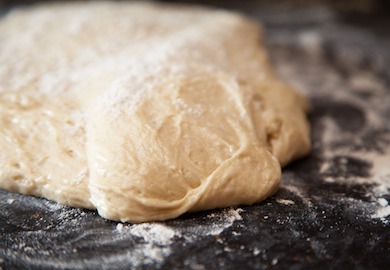
Bakery: The industry standard for dough conditioning. It complexes with amylose to prevent staling and improves gas retention for better volume.
Confectionery: Prevents fat bloom in chocolate and improves the plasticity of chewing gum.
Dairy: Stabilizes whipped toppings and ice cream to prevent ice crystal growth.
Best For: Highly lipophilic active ingredients, liquid oils, and robust emulsions.
Key Applications:
Pharmaceuticals: Solubilizing poorly water-soluble APIs (e.g., vitamins, hormones) in oral liquids and injectables.
Food & Beverage: Emulsifying vegetable oils in salad dressings, sauces, and bakery shortenings.
Agrochemicals: Enhancing the wetting and spreading of pesticide sprays on leaf surfaces.
Don't limit yourself to a single Polysorbate. For complex emulsions, blending a high-HLB surfactant (like Polysorbate 80) with a lower-HLB surfactant (like Sorbitan monooleate) allows you to precisely match the required HLB of your oil phase, resulting in unmatched thermodynamic stability.
Huana Chemistry offers Sorbitan esters and Polysorbates. Since 1993, our products have been distributed in over 70 countries. Our products can meet the requirements for food-grade, cosmetic-grade, feed-grade, and industrial applications.
- Packaging: 25kg/drum,220kg/drum and 1000kg/drum(special packaging is available upon request)
- Certifications: ISO 9001, ISO 22000, ISO45001, ISO14001, Halal, Kosher
We provide free samples with a minimum order quantity of 25 kg, offer complete technical documentation (COA, TDS, MSDS), and ship within 14 days after order confirmation. Welcome to contact us!