English
 日本語
日本語 한국어
한국어 français
 Deutsch
 Español
 italiano
 русский
 português
 العربية
 Nederland
Is Polysorbate 80 a superior choice simply because it has stronger solubilizing power than Polysorbate 20? If you believe so, your formulation might be heading for a severe stability crisis.
In personal care, food, and pharma R&D, many formulators mistakenly assume that "stronger" always means "better." However, the key isn't about which ingredient is more aggressive, but which is the better fit. This article breaks down the underlying chemical structures and real-world applications of Polysorbate 20 and 80 to provide a scientific guide for your next formulation.
The differences between Polysorbate 20 and Polysorbate 80 are primarily reflected in their physicochemical properties and HLB values:
Polysorbate 20 is esterified from lauric acid (a C12 saturated fatty acid). With an exceptionally high HLB value of 16.7, it possesses the strongest hydrophilicity within the Polysorbate series.
Polysorbate 80 is esterified from oleic acid (a C18 unsaturated fatty acid) and has an HLB value of 15.0, making it relatively less hydrophilic. Due to the presence of unsaturated bonds, Polysorbate 80 is more susceptible to oxidation compared to Polysorbate 20.
Emulsifier | HLB | E Number | CAS No. |
Polysorbate 20 Polyoxyethylene (20) sorbitan monolaurate | 16.7 | E432 | 9005 - 64 - 5 |
Polysorbate 80 Polyoxyethylene (20) sorbitan monooleate | 15.0 | E433 | 9005 - 65 - 6 |
(Technical Specifications Comparison: Polysorbate 20 and Polysorbate 80 including HLB Value, Food Additive E Number, and CAS Registry Number)
Based on the physicochemical properties mentioned above, the application scenarios for these two ingredients differ significantly:
Applications for Polysorbate 20:
Biopharmaceuticals & Diagnostics: Ideal for stabilizing highly hydrophilic proteins and vaccine formulations. It is also widely used in ELISA and Western Blot wash buffers due to its low background noise and resistance to non-specific binding.
Personal Care & Mild Formulations: Perfect for transparent aqueous solutions and serums that are highly sensitive to oxidation and require low particulate matter.
Applications for Polysorbate 80:
Solubilizing Highly Hydrophobic Systems in Pharmaceuticals: Provides strong interfacial stabilization for monoclonal antibodies, fat-soluble vitamins, and liposomal drug delivery systems.
Food & Heavy-Oil Emulsions: Delivers superior texture and anti-melting properties in ice cream, baked goods, and heavy-oil creams.
Industrial Applications: Due to its excellent emulsifying and solubilizing power, along with broader compatibility, it is widely used across numerous industrial sectors for processing oils, hydrophobic substances, and complex formulations. It is truly a versatile "all-rounder" in industrial applications.
Facing the choice between Polysorbate 20 and Polysorbate 80, how do you decide? Huana Chemistry suggests referring to the following steps:
For highly hydrophobic proteins or lipophilic drugs, Polysorbate 80 is the preferred choice.
For hydrophilic proteins or low-oil systems, Polysorbate 20 is the optimal selection.
If the formulation is extremely sensitive to oxidation by-products or requires long-term storage, prioritize Polysorbate 20 due to its lower risk of oxidation.
If the formulation demands exceptional initial solubilization and interfacial protection, and effective antioxidant strategies are already in place (e.g., nitrogen purging, addition of antioxidants), then Polysorbate 80 is a suitable option.
Q1: Does Polysorbate 80 have a weaker emulsifying ability because its HLB value is lower than that of Polysorbate 20?
A: No. The HLB (Hydrophilic-Lipophilic Balance) value indicates the degree of hydrophilicity of a surfactant, not its absolute "emulsifying power." Polysorbate 80 has an HLB value of approximately 15.0, which is slightly lower than that of Polysorbate 20 (approx. 16.7). This means Polysorbate 80 is relatively more lipophilic (oil-loving). Therefore, when it comes to effectively solubilizing highly hydrophobic substances (such as fat-soluble drugs or heavy-oil creams), Polysorbate 80 actually provides stronger interfacial stabilization.
Q2: When purchasing, how can I determine the quality of Polysorbate?
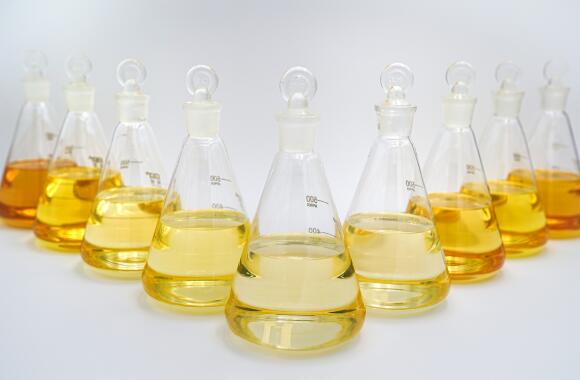
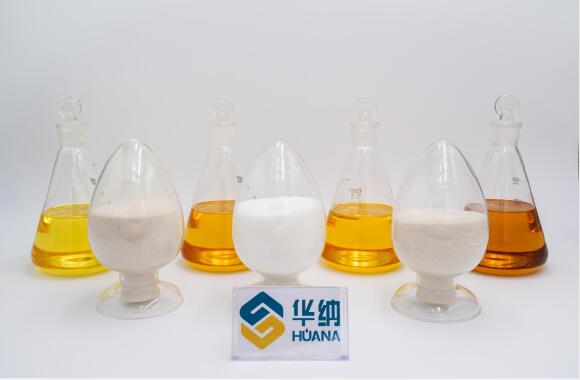
A: You should refer to the product's Acid Value and Saponification Value, while also checking its appearance. For example, Huana Chemistry’s Polysorbate 80 appears as a pale yellow to yellow oily liquid. If the product you are considering has a noticeably darker color, it typically indicates a higher level of impurities or improper storage. We recommend requesting a Technical Data Sheet (TDS) or Certificate of Analysis (COA) from your supplier for reference during procurement.
Polysorbates:Fatty Acid Composition and Specifications | |||||
Product Name | Appearance | Physicochemical Properties | HLB | ||
Acid Value(mgKOH/g) | Saponification Value(mgKOH/g) | Hydroxyl Value(mgKOH/g) | |||
Polysorbate 20 Polyoxyethylene (20) Sorbitan Monolaurate | Viscous Liquid | ≤2.0 | 40~50 | 96~108 | 16.7 |
Polysorbate 80 Polyoxyethylene (20) Sorbitan Monooleate | Oily Liquid | ≤2.0 | 45~55 | 65~80 | 15.0 |
Specifications Overview:
This table outlines the physicochemical properties of Polysorbate 20 (HLB 16.7) and Polysorbate 80 (HLB 15.0). Key indicators compared include the Acid Value (≤2.0 for both), Saponification Value, and Hydroxyl Value, highlighting the differences between the monolaurate and monooleate variants.
Polysorbate 20 excels in low interference and stability, while Polysorbate 80 wins in solubilizing power and high efficacy. In real-world industrial applications, "choosing the right grade" is just the first step; "selecting the right quality" is what ultimately determines the success of your product.
Many formulators have faced this exact dilemma: The grade is correct, so why does my perfect formulation suddenly fail when I switch suppliers or receive a new batch? The answer often lies in significant batch-to-batch inconsistencies.
At Huana Chemistry, we provide more than just Polysorbate products—we deliver data-backed stability assurance:
· Dedication & Experience: Established in 1993, we have over 30 years of exclusive focus on the manufacturing of the complete Sorbitan Esters and Polysorbate product lines. Our deep expertise allows us to provide professional product selection and sampling services.
· Data Transparency: Every single shipment is accompanied by a comprehensive Certificate of Analysis (CoA) with full test results.
Is your formulation struggling with emulsion instability or precipitation? Unsure whether to choose Polysorbate 20 or Polysorbate 80? Contact our technical team today for customized selection recommendations.